Kitobni o'qish: «Khon Yush. Way From the Ob»
© Z. Longortova, 2020
© International Union of writers, 2020

Zinaida Viktorovna Longortova was born on June 22, 1962 in the village of Kushevat, Shuryshkarsky district, Yamalo-Nenets Autonomous Okrug, Tyumen region. She studied at Gorkovskaya high school.
Graduated from Salekhard Pedagogical College named after Anatoly Zverev in 1983, speciality: «Primary School Teacher».
Graduated from Herzen University, St. Petersburg, in 2000, speciality: «Cultural Expert», «Teacher of History».
Now works in «Yamal-Region» State Television and Radio Company as a senior editor of the RPNS editorial board. She is the author of «Northern Color», a program in Russian, and programs in the Khanty language like «Tut Sultam». Since 2007, the programs «Teacher of the North» and «Inspiration» were published.
Yamal residents know her well as a publicist. She has published several books with the support of the Department of Indigenous People and «Yamal Writers»: «Monsyan mov. The Land of Fairy Tales», essay «The Teacher of the North», novels «Near the Bluewater Ob», «Sun Glare of Birch Bark», «Near the Fish Priver, On the Deer's Ground», «Imi Khily», «Ovas muvem schcashchty syit». In 2019, she published her first novel «Khon Yush. Way from the Ob».
Her works were included in the anthology of writers of the Yamalo-Nenets Autonomous Okrug and Khanty Literature of the Khanty-Mansi Autonomous Area.
She was published in magazines like Yamal Meridian, The Northerners, The World of the North, in the newspapers Khanty Yasan, Luh Avat, and Red North. She writes stories in Khanty and Russian.
Zinaida Viktorovna is a laureate of international, Russian, district television and literary contests for books, documentaries and feature films between 1990–2019, as well as a winner of a special prize of the Governor of Yamal for creating, preserving and promoting cultural values of indigenous small peoples of the Far North in 2019.
She has been repeatedly awarded with different diplomas and certificates. Veteran worker, writer, member of the Union of Journalists of Yamal-Nenets Autonomous Okrug and of Russia, Honored Worker of Culture of Yamal-Nenets Autonomous Okrug, master of decorative and applied art of Yamal-Nenets Autonomous Okrug.
In 2007, the «Wedding Argish», a movie in Khanty language was created depicting the worldview of the Khanty people. The film took second place at the Golden Tambourine International Television Competition in Khanty-Mansiysk. It also took 3rd place at Tyumen regional competition «White spots of Siberia». She was awarded a 3rd degree diploma in Murmansk at the international television competition «Northern Character» for professionalism and dedication to her topic.
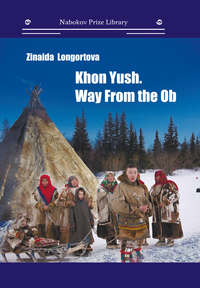
In 2018, work was completed on the first movie in Khanty language about the Khartaganov family, which saved seven orphans during the Great Patriotic War. The film «Khon Yush. Way from the Ob» received Gazprom Neft prize «For the Preservation of Cultural Traditions in 2019», as well as Grand Prix for documentary films at the International Cheboksary Film Festival and a special prize «For the Work of Life» at the Chukotka Film Festival «Golden Raven».
She is actively working in the public movements of the district: she is a member of the Union of Journalists of Yamal and Russia, member of the city association «Yamal To Its Descendants!», member of the national cultural autonomy of the Khanty «Pulngavat», member of the international movement of writers AFUL. Member of the jury of the literary competition of readers «Melodies of the Arctic Circle» as part of annual «Rugin Readings», member of the jury of the district folk competition; member of the jury of the interregional competition on local history and mother tongues of the Department of Education of the Yamal-Nenets Autonomous Okrug GAU DPO. Often meets with residents and students of educational institutions in Salekhard, Labytnangi, Novy Urengoy, Noyabrsk, Gubkinsky, Khanty-Mansiysk District and students of the district schools.
1937
Special Resettlers
On a cloudy September morning, a steamboat with a barge loaded with special settlers from Tyumen, Omsk, Tobolsk and Ishim approached the wooded side of the Ob River.
The dispossessed settlers sat or lay on the iron bottom of the barge. Putting on all the clothes, they rolled themselves into a ball from cold, trying to preserve the last warmth. These people did not even know where they were going to. They could only guess by the cold that was getting more severe every day: the dank autumn stain penetrated to the very bones. The river kept on carrying their barge towards the icy Kara Sea. They traveled along the Tyumenka, the Irtysh, the Tobol, and for many days along the mighty river Ob, which was high as the sea.
Some people left two days ago in the village of Kushevat, spread out on three hills in a cozy quiet channel. This time, those who went through many repressions, apparently, had to huddle along the Ob River, open to all the northern storms. According to the lists that the authorized NKVD officer read yesterday, some people were taken to the next settlement, Shuryshkara.
From 1917 to 1922, the Civil War was going on in Russia. Various classes and social groups of the Russian Empire fought for power. Striving to achieve their political goals, Opponents of Bolshevism united in large groups to overthrow Soviet power.
With the support of foreign states, they violently destroyed the working-peasant class, which actively supported the Bolsheviks. The losses of the Red Army and the civilian population were estimated at more than thirteen million.
In 1930s, the desire of the leadership of the Bolshevik party to implement the ideas of the world revolution led to many decisive actions. Stalin felt the danger and took radical measures before the Great Patriotic War.
March 1937 went down in the history of the country as the beginning of the «great terror», which became the highest point of repressive politics, the peak of political repression in the Soviet Union.
From February 23 to March 5, 1937, the Plenum of the Central Committee of the All-Union Communist Party of Bolsheviks was held, at which Joseph Stalin made a keynote speech «On the Shortcomings of Party Work and Measures to Eliminate Trotsky ist and Other Deceivers». He said: «…the more we move forward, the more success we have, the more the remains of the broken exploiting classes become embittered, the sooner they go to more acute forms of struggle, the more they harm the Soviet state, the more they clutch for the most desperate means of struggle as the last means of the doomed.»
The main enemies of the Soviet state were Trotskyists, who, according to Stalin, turned into «… an unprincipled gang of pests, saboteurs, and spies employed by some intelligence agencies.» «In the fight against modern Trotskyism» he called to use not the old methods, not the methods of discussion, but the new methods, the methods of uprooting and destruction.
The NKVD of the USSR had a clear goal: to destroy «enemies of the people.»
On July 2, 1937, the Politburo Resolution «On Anti-Soviet Elements» was issued.
All repressed people were divided into two categories according to the measure of punishment. Those assigned to the 1st category were expected to be executed, while the 2nd category was left for imprisonment in camps for a period of 8 to 10 years.
The NKVD punishing sword was supposed to hit numerous enemies, regardless of their location. Everyone who continued to «conduct active anti-Soviet subversive work,» wherever they lived: in a village, a city, on collective farms, state farms, were expelled with confiscation of property. All «hostile elements» were recorded and repressed.
Having accepted all their property, livestock and agricultural products on the forms of exchange receipts, they took special settlers to various regions of the Soviet Union for labor settlements as directed by the NKVD, including the Omsk Region, which included the Shuryshkarsky District in 1937. It was renamed from the Ostyak-Vogul to the Yamalo-Nenets National District.
The guards ordered the arrivals to leave the barge ashore. Men, women and children straightened up in hope that they might survive on this unknown land, emerged from the river fog onto the rocky river banks.
«Though it's north, look how beautiful it is!»
Arriving guests admired the cheerful autumn colors of a rare forest. Exhausted by a long road, the settlers studied their new refuge with excitement.
«It's not that bad: if we die on the ground, they will not throw us into the river,» two women talked among themselves. «The river is so wide and fast. So many corpses were thrown on the road. Where did it take them?»
«You won't find them now!»
«Yes. And who's going to search?»
«Look! There are people on the hill!» one of the arrivals shouted. Everyone looked at the hillock, where the girl pointed. Indeed, there were locals, carefully looking at strangers. Their faces, stature and unprecedented clothes embroidered with patterns were very different from the guests.
A little higher, behind a long sandy shore, on a small hillock among the taiga wilderness, the Khanty village of Pitlourkurt hid.
«Maybe we'll survive. After all, people live here.»
«I know,» the boy intervened. «These are the Khanty. I read and they said at school that below the city of Tobolsk, along the river Ob, there were lands of the Khanty people, and the Nenets are closer to the Gulf of Ob.»
«Or maybe they are not Khanty or Nenets at all?» suggested his mother, restlessly holding the talkative boy. «Although you know everything, you are here for the first time.»
«No,» the boy objected. «We were not taken to the ice of the Gulf of Ob, to the tundra. It's the forest tundra, which means we are in the territory where the Khanty live.»
«Stop talking!» shouted the escort.
«Hush, look!» whispered the woman who was just talking animatedly. «I hope they don't hurt her».
A young pregnant Tatar shrank under the cries of the guards wearing the NKVD uniform and hurried to the shore, bent double.
«Look, the girl survived and got to the ground.»
«Everything mixed up in this world! Why are we punished? Why is this girl tormented?»
«I had only one cow and I'm here for it now. They say I'm a kulak…» a woman said, exhausted to the extreme. She became even thinner over the journey, and it seemed that her skeleton was covered with thin skin, which was about to tear. Her eyes shone with kind and quiet light.
«And I always had a good household,» her friend straightened in misfortune, remembering the past prosperity. «It's painful for people to look at someone else's good, and here we are destitute.»
The second woman did not get thinner during the long journey. She squinted her eyes and looked evilly at the escorts and strangers. Everything annoyed her. She seemed angry at the whole world.
The arrivals moved to the shore in a row.
«Faster!» Shouted the guards. «Hurry up!»
People silently looked around. They carried ashore the bodies of those who got frozen at the barge that night. The guards hastily distributed shovels among the settlers – to dig holes for the graves. They buried the dead, leveled the land, and drove people higher up the hill.
Autumn has already taken over. The morning was hazy, gray and inhospitable. Fog crawled low over the river, covering the dark waters of the Ob with a light haze. It went in colorless paths along dried Pitlyar litter, along small streams, stretched out like a mosquito haze along the taiga light forest, painted with cheerful colors of autumn, affectionately hiding the warm earth with gentle swan fluff.
At that moment, as if mourning the restless souls of all those who had died on the barge from hunger and cold, women cried higher on the hill. The guards were taking three men in old suede malica to the river.
Earlier that morning, when the horizon was slightly twisted with the silver threads of khutli – dawn, a kayak boat docked on the shore of Pitlourkurt. There were two reindeer herders and a man wearing the NKVD uniform. He jumped out first, followed by Iakov Matveevich Tyrlin. He helped the old man with sparse braided hair, faded like the feathers of an old haley – a Siberian gull. It was Taras Nikonovich Rusmilenko. Both were tired and tried to stretch their arms and legs.
People were brought from afar, from the villages of Vulykurt and Khashkurt that lay upstream of the river. Three days ago, shamans could not be found in their native villages where they arrested many «enemies of the people», but nevertheless they caught them in hunting huts. Now they had to catch up with the ship that was going towards Salekhard.
Seeing Iakov Matveevich, a fair-faced, fair-haired man over forty, the villagers respectfully bowed their heads, but hid their eyes. For many kilometers along the Ob, people revered this man, the Great Shaman, nicknamed «Lylan Luhpi Shepan iki» – the «Living Spirit», which had a special gift of healing serious illnesses. They could not help him in anything and therefore only bowed their heads in deference to the man who had helped them in difficult times, to his heavenly gift.
His married daughter, Vurty Matra Khashkurne, who was married in this village three years ago, ran to the boat. She had already been informed that the authorities had brought Lylan Luhpi. She rushed to the shore like a breeze, but even then she did not forget to cover her face with a beautiful burgundy shawl with long white tassels and a rim blue as a river. It was an ancient custom. She was not the one to establish it, and not the one to neglect it.
On the day of the matchmaking, each girl covered her face with the edge of her headscarf forever, hiding her from the eyes of her husband's older relatives. From that day, not a single self-respecting man: neither an old man whose hair was foamed with gray Ob waves, nor a father-in-law, nor any other of her husband's relatives – dared to look at her daughter-in-law. This has been done according to the traditions that were once established in ancient times.
Hashkurne wanted to rush into the arms of her father, but was blocked by the escort:
«Where are you rushing, you mad girl! You can't come here. Don't you see? These are enemies of the people!»
She hesitated and stopped halfway, puzzled, as if delving into something, carefully examining the escort. Knowing the calm nature of his daughter, her father prudently shouted:
«No need to cry, daughter, I'll be back soon!»
The quiet, obedient Khashkurne did not answer. She carefully covered her face with a handkerchief, as if hiding from everyone, and quietly fell silent, hidden in a crowd of curious women.
Residents of the Pitlourkurt village cried for people on whom their lives were based. One woman grabbed her husband's clothes and, unable to hold him, fell to the ground. She did not let go of the hem of his malica, and her body dragged lifelessly after him.
Vasily Ivanovich Khartaganov, local, was a young, forty-four-year-old shaman. He tried to pull the edge of his clothes from his wife's fingers, but apparently they had convulsions, so she couldn't unclench them. The guards withdrew her hands from malica with force, but nothing helped. The shouldered short man, trying to stay calm, continued to walk towards the shore after his fellow tribesmen.
Nearby villages that day were left without support, without shamans, without doctors. Since ancient times, they supported their people, served as a bright guiding star, a clear moon and a warm sunbeam in the life of this snowy land, which was not always easy.
«Damn shamans! Let him go, you fool!» Shouted the guard.
The guards were already used to the grief of others. Women cried in every village, some of them even rushed at people in uniform. Particularly active were beaten with whips. This was their task: to cleanse the society from dangerous people, the brave, wise freethinkers. To protect people from themselves, shuffle, reorganize, put them in place. It was like removing a leader from a deer herd, decapitating a motley stock and driving everyone into a snowstorm. If a wolf pack attacks, only the fastest, the strongest and, of course, the most cunning will survive.
Father of the nations Stalin was to foresee any discord in a large multinational family. Riots were eradicated without delay, using any methods. Otherwise, there could be trouble.
The leader's iron hand reached «to the very outskirts» of the Soviet Union. There was no way to hide in the taiga wilderness or in the endless tundra of nomadic reindeer herders, nor in the marshy swamps of the Ob North.
The decisions of the Politburo of the Central Committee of the АН-Union Communist Party of Bolsheviks and the orders of the NKVD in 1937 brought fear, hopelessness, denunciation and spying, including to the North. They were looking for spies everywhere. The planned tasks, figures and norms for the arrest of «enemies of the people», approved in the center, served as a guide for the local NKVD bodies. They had a kind of social competition for the greatest exposure of «enemies of the people.» The arrests of shamans and «kulaks» destroyed the indigenous peoples of the North. Instead, the leadership assigned obeying people able to bow their heads before the authorities. But here, in the dense swampy lands, among the small peoples of the Ob region, accustomed to roam freely along their hunting and deer paths, through the vast expanses of their native land for centuries, there were still few of them.
Therefore, today the main representatives of these people, confident in themselves, silently moved to the unknown. Like an unbending trunk of a cedar, they did not bow, and did not lower their heads. And it did not matter that there were few of them among the so-called shamans. The storytellers, stewards of sacred rites, the mind and power of the people, went away forever and nowhere. In today's mess, no one could disobey the Father of Nations. The police, the NKVD, even if they wanted to help someone, did not have the right to do so. They were firmly accustomed to the forgotten Khanty mountains, bringing them into a new order.
An elderly woman in front of the crowd pushed her old man:
«Help me unhook her fingers. She's got three kids without a father at home! They can take her!»
Together, they went to Khartaganov's crying wife, dragging lifelessly after her sweet, most dear man in this world. The young shaman, realizing what could happen to the mother of his children, tried to tear off the hem of his clothes. He finally managed to grope and tear a weak spot along the seam of his malica, sewed in the evenings by his Khutline – the morning dawn of the young shaman. As he walked, he continued tearing off the wide hem of his clothes. Skilful stitches sewn with reindeer veins gave in with difficulty. Finally, he stepped over the torn part of the malica, leaving it in the hands of the one that was half of his soul, half of his heart. His beloved remained sobbing angrily at the earth.
«Heia!» The crowd was agitated. «Your husband won't come back. Don't you howl like that!»
«He tore his clothes alive. Bad sign.»
Long winters and frosts in the North established their conditions for the funeral rites that had appeared in distant times, when people got used to live among the eternal snows. It was believed that in the «lower world» the dead live an ordinary life, so they need all the necessary utensils, including clothes. Women were buried in a new yagooshka, and men were buried in their malica. During the funeral, all things were spoiled – torn or cut with a knife. With a hatchet they cut sleds into two halves.
Today, the shaman tore his clothes going on a long journey. He knew the customs, but the family was more important than the ancient customs.
Keeping his dignity, the man, not knowing what would await him ahead, without bowing his head, went to the barge. Without looking back, he walked to its middle.
Khashkurne, not seeing the grief of others, with a heart breaking in her chest looked only after her father and whispered:
«Come back home! You promised!»
The escort, having seated three shamans, ordered to move ahead – and the steamboat rattled again, firing a black column of smoke. Under the female cries, the cry of children, the barking of dogs, the vicious screams of the Ob big gulls «Chale, chale, chalev, chalev!», the steamboat headed to Salekhard, which was Obdorsk a couple of years ago. There were more shamans there that needed to be taken to jail.
«They will be taken to the south, to Tobolsk, or Omsk,» said an obsolete woman, «they say they put shamans in prisons.»
«And they brought us to the North. They are unaccustomed to heat, so are we to cold. This is the punishment, but for what?» her friend asked, not addressing anyone.
«No, we were torn from our native land, from our roots. Not only the plant dies without roots, but also people.»
«But man is not a tree. We still have a head and hands. Hopefully, we will not die of longing and hunger!»
«The main thing is that we were not sent to prison. We will live free.»
«Why are you standing here, kulaks? Settle down, prepare a place for dugouts. You will dig tomorrow. Otherwise, in the open air you will die before winter!» Shouted the fair-haired man in uniform.
«So we'll spend the winter here?» The woman said.
The crying Khanty slowly moved to their village.
«Lucky ones, they are free, free!» – the woman said enviously. «They go whatever they want.»
«Who knows if we have free people today?» The second woman answered, looking at the grass that had died before winter frosts.
Morning. The colorless faded sun appeared on the edge of the earth behind a strip of still green talniks. The horizon slowly tinged with pink, encouraging shades. A gray sky with sparse clouds foreshadowed good weather without rain. Pink stripes, a multitude of the thinnest long fingers of Sorni Nye – the Sun, divided the mighty river into two halves. The water has already become lighter from the south side of the Ob, but from the north the rays of Sorni Nye fingers have not yet illuminated the deep waters of the Ob river, sacred for all Khanty, darkened during the night. The mighty As flows, powerfully carrying its boundless waters to the north. And on top is the beauty of the swaying Ob wave on the river and the peace around.
A man and a woman from yesterday's village were returning from fishing early in the morning. They landed on the shore where a barge had stood the day before. The man pulled out a light kaldan boat, picked up a full bag of fish, and carried it to the people sitting and lying on the ground. This was the law of hospitality of the small Khanty people – not to leave guests that descended to your land hungry.
«Where are you going?» a fair-haired guard blocked the way to the old man. «What do you want?»
A small fisherman was smiling friendly, carefully and affectionately looking at the guard. Pointing at the bag, he explained in broken Russian:
«Fish. Eat!» Pointing to people and fish, the elderly Khanty tried to explain his arrival. The guards, looking at the bag with a fresh catch, began to talk:
«I'm really hungry. Maybe we should take it?»
«But why did they bring the fish? With what intent? Maybe they want to report on us?»
«They are always naive, meet everyone, treat them to tea!»
«Let's take the fish. I'm sick of these canned foods!»
«Let's give kulaks the remains. They should eat something hot. It's been a month without hot water!» Without further ado, the fair-haired guard pulled out a bag of fish from the old man, apparently their leader, and dumped the contents onto the grass. Fish, still alive, especially pike, moved their gills heavily without life-giving moisture. Returning the empty bag, he quickly pushed the old man to the shore:
«Get out of here, old man! You have nothing to do here. Or you will be taken to jail on a barge!»
No longer burdened with luggage, the man calmly, pleased that the guests would be full, walked to the boat without any fuss. Not knowing the Russian language, he could not understand that he was threatened. He had to put the networks in order, so there was no time for this talkative man in uniform. The could talk next time over a cup of tea.
Rowan and bird cherry trees with small, beaded northern fruits decorated the colorful autumn forest along the coast. The cheerful colors of a foreign land did not please, but soothed the souls of the guests. On the shore, the women who had left the barge the day before rattled with boilers and teapots. Some became bolder, and went along the sandy stretch to the Ob to collect water.
They stuffed teapots with lingonberry leaves, and collected rowen bursting at the edge of the forest like flames. The children stretched their hands to the branches of cherry bird berries. Finally, a fragrant life-giving drink would boil and the forces would return to people again. The pregnant Tatar, bent over, hugging the unborn child with her whole thin body, remained lying on the wide rosemary tubercle, dotted with the burgundy lingonberries she had taken overnight. The earth warmed her, attracting and hugging. She couldn't get up in the morning, although on a cold barge she tried to be on her feet all the way. Iron sucked heat from her body to the last drop, and only her heart and her baby, who sometimes pushed inside, reminded her that she was still alive.
Soon, the women not only boiled tea, but also made soup from the fish given by old people who were still standing on the shore, straightening nets for new fishing. The guards put large pieces of boiled fish in aluminum bowls, and sent it to their mouth with pleasure. The soup went to the kulaks. They had hot food for the first time in many days. Having counted all the people, women handed everyone a piece of boiled pike. One of the women came up to the Tatar and brought her a mug full of soup:
«Drink soup, eat fish, girl. Eat yourself and feed the baby, so that the baby is born strong.»
The young woman took a mug with a hot soup, made a sip and gratefully looked into the kind eyes of her fellow traveler. Many times during cold September nights on a barge, when the girl seemed that her breath would stop from the Ob cold night fog, this thin woman hugged her and warmed her stiff fingers with her breath to help her fight for life and for her child.
But before the pregnant woman started eating, her contractions began. After some time, the fading yellow leaves of the birch under the woman in labor startled as they heard the last breath of a dying woman. A little later, they heard a weak squeak of a newborn. Confused women stood near the young girl who had faded away at the beginning of her motherhood. Someone automatically took a cooled kettle, and began to wash the child. The orphaned baby was wrapped in rags left after the dead mother.
«What shall we do with the baby?» Exclaimed the woman who helped to give birth. «It'll die!»
«She couldn't even put it on her chest. She gave her last strength to give birth to this child. What shall we do with a baby in a deep forest, without breast milk?»
The confused guards jumped from the grass, shrugging their shoulders in bewilderment.
«Give the child to kulaks, and let them mess around. If it dies, so be it. We have nothing to do with this! This child is not on our lists» said the senior guard.
«After all, it was born alive. You can't bury it with his mother. It will suffer without milk,» said the second, dark-haired young guy, looking at the woman who had passed away in labor. Pulled out of the warm maternal house, he still could not get used to his new life. He saw many deaths along the long road, the grief of the settlers, and he was almost used to it. The endless tragedy raging across the earth touched the kind guard to the very heart, but he couldn't help anyone – he had no right to do so.
«Right. Why do we care?» their chief replied angrily.
«It's unaccounted. Maybe they won't ask about it. Let's give the baby to the old people that brought the fish,» one of the subordinates said quietly, as if convincing. They did not talk for a while. The chief was in a hopeless situation: he couldn't kill the child, and he was not devoid of human feelings. He had his own children waiting for him at home. He was tired of guarding innocent people who, overwhelmed by the grief in the loss of their home, did not even resist, as they were afraid to incur greater trouble. Soon a disgruntled shout was heard.
«Hey, Khanty people! Where are you? Still here?» they called the old people.
Husband and wife stood at the boat, bewildered. From the side of the river which had seen a lot as it quickly carried its waters, they looked at the unfolding tragedy.
«Hey, old man! Go ashore. Bring your wife here!»
With their eyes full of tears, women gave the newborn baby to the approaching fishermen. The little lump, wrapped in rags, was silent.
«Take it. It might survive. If no, who would ask?»
«Now go away! Yes, faster!» With a sigh of relief, the dark-haired guy hastily nudged the old men who did not understand anything – away from the place of the tragedy. The woman, lifting the hem of the upper dress, silently wrapped the newborn. Not knowing Russian, but realizing that the baby didn't have a place there and was their child now, she quickly walked to the boat, just in case the angry boss changed his mind and took it back. Her husband hurried to follow her.
Later, sitting in a sack, Anshem Iki asked his wife:
«Who is it, a girl or a boy?»
«I don't know! It's small, a newborn.»
Then, glancing up to heaven, she finally smiled, rejoicing at the unexpected gift, feeling a surge of motherhood from the small warm lump, like in her youth. She kissed the baby:
«Heia! Great Turam! What have we done so well that the goddess Kaltashch gave us a baby?»
«Who knows the deeds of the gods?»
«Heia!» Levne sighed bitterly. «You row faster. Hurry up! The child will freeze. It didn't have time to be put to his mother's breast!»
Children and their mothers cheerfully jumped over the smoke purifying flesh and soul, saying:
«Shanaku, ponaku! Put some luck!
Shanaku, ponaku! Put some luck!
Shanaku, ponaku! Put some luck!»
Khutline picked up the newborn, jumped over the fire three times, and repeated after the children:
«Shanaku, ponaku!
Shanaku, ponaku!
Shanaku, ponaku!
Kaltashch Anki, give healthy legs and arms to my Altam evi!
Let her play while grandfather walks for prey!
Let her live a long life while her grandfather's checking fishing nets!
Let her sleep soundly while her grandmother does the needlework!»
«Let Sorni Nye, that walks among us invisibly, marks the name of my daughter in her writings – Khatan evie,» Levne was full of happiness, satisfied with the ritual.
Following the customs of children initiation, she didn't forget about gifts: threw a large beautiful shawl over Khutline's black hair. She bought it when she was young at the Obdorsk fair: noisy, cheerful, where the merchants exchanged furs and meat to the things Khanty women desired: cast iron boilers, needles, jewelry, and much more.
Today there were no merchants, and no cheerful fairs. The inhabitants of the taiga outback wondered where did they go. None of them could know that those wealthy merchants were either destroyed, or exiled to the most distant parts of the USSR.
And the holy city of the Khanty princes Taishins – Pulnavat Vosh, which was located at the exit of the Poluy River on the Ob, has already been renamed several times. But he was subject only to the Khanty gods, located just below the city – this is what from generation to generation the Khanty people respectfully passed on to their children. The Great Turam assigned his best sons to rule since the advent of land, when the sacred bird Gavia pulled this land from the sea, and called the fiery river cape Lunkh Avat. They protect the ancient settlement Pulnavat Eokh from misfortunes. The sacred cape of the gods is revered even by wayward Nenets and other small nations living off the coast of the Ob. The gods sitting there were so mighty that no woman could even watch in that direction, not to mention stepping on that sacred cape with her filthy feet. Coming to the winter fairy, and passing the Lunkh Avat cape by in order not to disturb the gods, men had to sacrifice a deer. Then the Pulnavat settlement was populated by the Russians and Zyryans, and was renamed to Obdorsk. This is how they wrote it down in Russian papers, without even asking the owners of the land. After that the Taishin clan left the town, and settled above the sacred cape of gods. Long live this family guarded by great gods. The town was later called Salekhard. But for Levne it was still the town of the Grand Prince, who was paid by her grandfather and great-grandfather. Passing through or by, each Khanty man had to bring a gift – toss a silver coin into the clear water of the Ob. Those who passed Lunkh Avat by and moved further, had to bring a bloody sacrifice.
Levne put four more needles with reindeer stitches for sewing and four red ties into the hands of Khutline – a shishkel for false braids for Altam anki, the third mother Khatan evie.
«Let my girl be a craftswoman, and in no way she knows what need is. When she grows up, a thin needle will cheerfully dance in her fingers, just like it dances in your hardworking hands, karkam Khutline. Now this is my daughter – Khatan evie, and your milk daughter – Altam evi! While you are waiting for your master, your little birds are always welcomed in my house. Today, five mothers love and cherish our girl on Khanty land – Pukan anki, Perna anki, Altam anki, and me, her mother. Kaltashch Anki herself will be protecting her from heaven».
Children were jumping and laughing, and then ate sweets.
Before Khutline entered her house after the initiation, she saw Kurtan iki at her doorstep. On the rights of a superior, being the foreman of the village, he entered her home, and took an old icon of the Virgin from the family hearth without hostess permission. Like all the inhabitants of the village, he knew that the family shrine was hidden in a chest along with the Khanty spirits since the red authorities destroyed the Russian church in Kushevat. Now the icon, transmitted from generation to generation through males in the family of the young shaman, was in the hands of Kurtan iki. Khutline knelt before him, reaching out for the defender of the family, but Kurtan iki kicked her out of his way with his foot. As he kicked her, the woman remained lying on the ground, howling sobbingly, but covering her mouth with her hands so that no one would hear. If anyone finds out that she hid an Orthodox icon in her house and worshiped it along with the goddess Kaltashch, everything would be over for her and her children.
Khutline didn't remember how long she lay at the threshold of her house, what she was thinking about, left without a husband and without a defender, but the next day, without a shadow of fatigue and despair, she went fishing with her eldest son.
«No one should feed my family,» the woman decided, «I am not a helpless child.»
She had a boat and oars left after her husband, and family gods sitting in the sacred chest. Wouldn't they give her strength and mind to rise to her feet? She had strong arms and 3 children.
«I am their mother. Their father entrusted me with the most precious thing – their children. Why should I torture my little birds and wait until they bring us fish home? I can't be full of someone else's piece,» she decided.
No one came from the village council to inquire about the icon.
«Kurtan iki did not take the icon to the authorities, which means that he stole the shrine from his cousin. What a sin,» Khutline was dumbfounded.
«How could this atrocity happen? In a different time, the elders of the thief's family would have chopped off the whole hand at the sacred fire. Now they are allowed to do anything,» the young woman was horrified.
Exactly one year later, on a bright summer night, when the sun crouched at sunset to have some rest and move along the sky again, and everyone in the village fell asleep, someone quietly opened the canopy of the house where Khashkurne and her husband Kushta iki lived. The guest coughed quietly, like all people did according to the Khanty tradition if they entered the housing with good intentions. Khashkurne slipped out of the canopy like a small ermine and gasped:
«Ashieh! Dad!»
It was Lylan Luhpi shepan iki sitting at the entrance, inaudibly, quieter than the arctic fox, bending one leg. His weathered face was dark, like the inner side of a spring birch on which women loved to scrap out bizarre ornaments.
The malica of the great shaman was not even torn, but completely tattered.
«Hush, daughter, don't scream!»
Khashkurne clasped her mouth in her hands and rushed to her father.
«Everything's fine, daughter. I'll sleep with you a little and get home tomorrow.»
Sleepy Khashkurne's husband went out as he heard the quiet whisper from behind the canopy. Seeing his father-in-law, silently, without any surprise, he approached Lylan Luhpi shepan iki, and greeted him as if he knew for sure that his wife's father would return home. The great shaman rose and, taking the head of his young son-in-law, kissed him on the cheeks three times.
– Set the table, mistress. My father-in-law is tired after a long journey, so make a bed for him!
Inviting the long-awaited guest to the place of honor in the house, he sat next to him. Khashkurne set a tea table at her father's feet. As a sign of respect, Kushta did not start the conversation first, he waited for the great shaman to tell how he returned home, and how he escaped from the people that wanted to destroy the soul of Lylan Luhpi shepan iki. The guest silently drank the first cup of slightly warm tea. He forbade to make the fire in the house: they didn't want curious eyes and ears. After drinking the second cup of tea, he threw a hungry look at the plentiful table that the daughter had covered, but only grabbed a khul voy with his fingers, slowly chewed it, broke off a piece of bread and said:
«I was the only one to get out of that prison in Salekhard. The rest were sent to distant lands, the lands I've never heard of. I didn't rush home, as they could grab me and send me to prison again. I got a little confused at the beginning of the journey. The spirits closed the road for me, did not let me go home, protected me from all sorts of misfortunes and from the hands of the new government. I went to the forest side. It seems that our gods were afraid that they would again take me to prison. I spent the winter in the hunting house on the Pole, people helped me. I even brought a child to his feet. He was dying, got a meat piece in the wrong way. The spirits helped me cut the throat with a hunting knife. The child swallowed air and came to life. Turam helped me every day, he didn't leave me alone with my troubles. For a long time I was treating the boy, and he recovered. His parents hid me in their ancestral lands for the winter. Kind people gave me a hunting belt with a knife, since mine was taken there in prison. In the spring, I crossed the talnik islands to the Ob. I spent spring a little higher than Palvoshkurt. There was a lot of water. I didn't cross the channels and rivers in spring water. I walked slowly, in no hurry. This spring was good: a lot of ducks and eggs. I was waiting for summer. As it became warm, after the ice drift, the moon was born again, and I moved home. In one moon growth I have overcome the path to you. It's up there in the sky, transparent, rounded, full, going to decline tomorrow. The water was high, so I had to circle and cross small rivers. It was difficult with the fowl, but the knife helped a lot, thanks to the good people…
Now I am on my land. Tomorrow night, I'll start my way home!» «My dear father-in-law, I'll take you home on my boat. You can't move on a long journey when the moon declines.»
«Don't worry, son! I know the road well, and I won't rush. Otherwise they will find me and take me again. I will leave some time traveling. We must not show up in public, it's dangerous for your family».
A baby cried in the canopy. Khashkurne rushed inside to calm her son.
«A son? Daughter, give my grandson to me!»
Khashkurne came out from behind the canopy with a night cradle, happy with her first motherhood, and gave her baby to her father. Lylan Luhpi shepan iki put the cradle on his knees, and kissed his grandson soundly. He looked at his grandson, and his face again became gloomy, as if he had seen something terrible. He gave back the cradle with his daughter's child:
«Rejoice that you have a baby. Let him know that for him you are the sun, the moon, and the stars. May joy and happiness not leave his heart. Let him be happy with your love. Thank Kaltashch Anki for the child, who bestows the children with one hand and takes the souls of children with the other. Maybe she'll feel sorry for you, and give you more children.»
The next day, when everyone in the village was already asleep, the great shaman fluttered out of his daughter's house, like the shadow of a polar night owl, and slowly headed along the canal, lurking in the bushes towards his native village. There were fifty kilometers left, and he was in no hurry. He was carrying a large bag of groceries. There was enough food for a long journey, and the shaman was good at distributing food throughout the way. A summer trail was winding and dangerous. There were several rivers along the way, swamps, and a trip across a large litter of a river called Pilyokhlor. This path was not difficult for him. His soul bubbled like a big lake full of fish, and boundless joy burst out.
These were his native waters and his native lands. This was the land where he was born, breathed air for the first time. He was at home.
Secretly, like a driven animal, and yet without losing his inner dignity, he walked through forests and swamps. Not a single person on this land could give him to the authorities: hearing the name of Lylan Luhpi shepan iki, people bowed or lowered their eyes as a sign of respect. The shaman, however, made his way through the forests, hiding from people. It was important for him that no one was hurt through his fault. He walked along the mossy forest paths, leaving no traces. He overcame talnik windbreaks like a white sacred ermine, passed unfamiliar paths like a light, quiet arctic fox. He didn't look around from fear, like a hare. His soul did not howl like a wolf, but sang, murmuring, like a hasty forest brook – a soim shimmering with all the colors of the rainbow, the one that hurries to the great river As.
He didn't look for an easy way; his natural instinct of a hunter told him where to move, where to turn. He walked without fear, like a brown bear in the forest. He was in a hurry to his native nest, to his small warm house standing under the centuries-old evergreen cedars, which had remained from his grandfather. This is where he took in the taste of the motherland with his mother's milk. He was a free man, and there was no sin on him. Otherwise why would the Almighty Turam help him? The sacred shaman's gift was also sent from heaven. How could a little man resist the will of the gods?
Winter
The settlers who lived in the dugouts, were sent to fishing in the summer, and in the winter they were sent out to the village to work on a timber work area. Although the trees were rare and not large, in some places in the forest tundra, on good soil, larch trees grew quite high, and were suitable for building houses. Fine wood was laid for firewood. They didn't complain, they tried to do any job accurately and quickly, with the hope that they would someday be released home. Now they were settled seven kilometers higher along the Ob from the village of Pitlourkurt.
In the dense woodlands, among the swamps, new houses were being built. Axes were pounding, saws rang from morning till night. The village was still small, but was quickly built.
The wood work area was near the forest road, and the exiles were often surprised:
«How could a well-trodden road appear in this wilderness, and why would the Khanty people need it, if they only ride deer, or boats in summer? Even hunters do not step on a wide path.»
And then a hunter came out of the woods past the exiles and stepped onto the wide path. He nodded to the women as a sign of greeting, crossed the road, and went hunting, skiing along his own track towards the village. His hunting belt was all hung with squirrel carcasses, and a fox tail flashed red.
There was a considerable state plan for collective households, that's why hunters stayed in the forests until late. The moon slowly sailed after a man in a light malica with a hunting belt and bear amulets.
While the hunters were fulfilling the daily plan, bypassing their lands, the day tended to night, so the caring moon zealously illuminated the dark paths of accurate Khanty hunters. Countless stars scattered across the sky flickered joyfully, showing travelers the way.
In some places where special settlers worked, the road expanded. The horses harnessed to the sled, loaded with small logs, calmly dispersed and continued their way. Women often looked at that crawling curved road. What was there, behind these lands and swamps? Was it possible to get home through it? And again they lowered their eyes to the screeching saw in their hands.
«The Khanty say that the road is in these forests for many centuries, maybe five centuries, maybe even more. They say that Ermak, the Don Cossack, came here to conquer these roads in ancient times. And then Russian peasants came here along the beaten track in search of a better life, as well as convicts in shackles escaping from authorities.»
«I heard,» answered Pukan anki, «I read at school that before Ermak Russian merchants took silver sable, white fox, snow ermine, squirrels and other furs and brought it to the royal chambers. They took soft gold, paying with firewater only. God knows how they survived to this day. Local residents regularly paid yasak, so the tsar issued a decree not to exterminate foreigners. He banned the import of alcohol into Siberia, so as not to accustom the people to hard drinking. But even under the risk of death, merchants who were accustomed to free furs from illiterate foreigners, brought the terrible potion into swampy impassable lands.»
«You don't know what was going on here after the revolution! Everything was taken from the local population: furs, fish, meat, they didn't even leave firewater in exchange. And then, when they divided power in Russia, the white fled through the taiga to reach the Ural Mountains, and the red, catching up with them, established their order in the taiga mountains. They say that people were trampled down like grass, chopped down like firewood, and there were so many indigen people killed that the villages were almost depopulated.»
«Yes, there are few of them now. In some villages, there are up to five or six families. Apparently, there are so few Khanty people because they were exterminated in dense forests.»
The women looked again at the well-compacted road.
«They say that the road stretches to Tobolsk itself, past which we were taken. How much does it take to get to the Siberian capital?»
«Don't say that! Hush! Be quiet, or someone can hear you!» Whispered Pukan anki, the godmother of Khatan evie.
«In winter, the road for coaches runs down the Ob River, this one is kept only for the off-season. In autumn there are water openings (polynya) along the Ob, especially if there is a lot of snow, but still people go along the river. Until the very spring, deer argish and horse teams go until the ice is gone.
„Seems like the Khanty don't like the forest road. They call it the Royal Road.“
„Why would they like it. It brought so many troubles and adversities!“ And the women again began to cut trees.
Blizzard January and frosty February were particularly difficult for women and men at the timber works. Dark December wasn't easy for half-naked people either. They cut trees knee-deep in the snow, then pulled them out onto the wide road, and loaded them into horse-drawn sleighs. Wearing old sweatshirts and torn clothes, all day until dark they silently did the work they were told. Fortunately, it's getting dark early in winter, and the moon does not always illuminate the pain and suffering of people, so they were released home early. The couldn't stay in the dark forest, after all, they could run away.
A silent night star has seen much in its lifetime. Looking at the martyrdom of people from heaven, the moon was happy to melt within a week: it couldn't stand all of that earthly grief.
In recent years, those who made friends with the locals got warm fur kits. The settlers exchanged them from local Khanty women for beads, then for bright earrings. Pukan anki of the little Tatar worked in her kits covering her knees. Levne gave her friend fur boots two years ago. Quietly, before the guards saw, she laid them by the woodpile and sprinkled them with snow. The midwife of Khatan evie could only take them and put them at the wood works.
The woman quickly learned to care for boots with long boot-top. The main thing was that she needed to put grass insoles not only for heat, but so that they absorb moisture, and, of course, dry in time, kneading wet soles with her hands. Pukan anki looked well after her boots, and therefore Levne replaced her kit soles only once, the previous summer, sewed new ones and said:
„You care for your kits like a karkam, a dexterous Khanty woman. You can wear them for another two or three years.“
That day women have already complied with their norm. They were standing near horses laden with forest and talking:
„They don't even spare a pregnant woman, though she will give birth soon,“ Pukan anki pointed at a young woman who raised a felled tree to drag it to the road. „She'll give birth right in the snow.“
Looking down at the ground, the godmother said:
„We've already built a new village, but there is no freedom. We have to come every day.“
„We are fine, we have boots and sweatshirts. Women from the second brigade who were sent to the Kunovat river last year were all wearing shoes. They were urban. I wonder if they survived or not? It's good if the local Khanty shared their clothes, but what if there were no people there? Frost penetrates the skin, and your whole soul aches.“
„How many winters and years have passed since they sent us into these snows?“ Pukan anki pulled up her kits, carefully brushing off the adhering snow so that they would not get wet.
„It's been five years I guess!“ answered the godmother.
„Well, yes, the girl, our little Tatar, survived among the Khanty on fish. She's been almost five now, and she's only talking their language.“
„I also saw her, she's already big. I thought it was their child running around in a headscarf, in local clothes. But they said it was the little Tatar. They recognize me, call me Godmother.“
„I pray for their family every day, because they called me a midwife. When Anshem iki brought me a knife and mumbled something on their language, I got scared. I thought he came to kill me. But he shoved the knife into my hands and left.“
„Well, yes, now we know their customs. He gave me the cross, remember? I could be sent to prison for it. I was crossing myself, fighting off, but this heathen put it in my hand and left without crossing. I tried to hide many times, but for some reason I'm afraid to throw it away.“
„Keep it,“ her friend reassured her, „maybe this knife and the cross are mercifully saving us in these forests.“
„The Khanty say we protect the girl, but maybe it's the girl and the gifts from strangers that protect us among these snows?“ Khatan evie's godmother looked at the road with a blurred look.
„Why strangers? These are now our relatives, the parents of our goddaughter,“ protested Pukan anki, who was flushed from frost.
Soon the foreman came on a horse and a sled loaded with firewood, and went towards the new village. Countless villages have appeared all over the North. How many people the new Soviet power drove from their native lands?
In the old days in Russia there were villages and towns, now there were settlements. This word always came from convicts, settlers who had been driven to Siberia even in tsarist times. Now the Soviet government was doing the same.
Another hunter went to women's workplace, returning home with a hunting belt full of different game. The hunter stopped to rest, leaned on a ski stick, and cheerfully greeted the lumberjacks:
„Vushcha ulat! Juh evatty hojatat.“
„Hello, Juhur!“ The women were delighted.
„I'm sure you've already fulfilled the production plan for fur ahead of schedule! Your belt is full every day. We saw your photo on the board of honor!“
„Little more! Pa voi, look for ooh velam tail, mohty hun moshatlen! The beast also has brains, not easy to get it.“
„Well done! You are young, but have two children and you are the best worker already!“ Talkative women understood little from his answer.
Far away, on the other half of the Ob, a deer argish appeared. A large herd of deer was following the sledges. Yuhur hurried home.
„Look,“ Pukan anki pushed the godmother of Khatan evie, „the reindeer herders are returning.“
„I wonder if the Ob is all frozen? Yesterday, people said that the water around was open. The river is insidious, the current is fast, and the wide Ob freezes unevenly.“
„Yesterday I went to get water, at a stony roll over, and the current is still seething. How do they feel that the ice is frozen?“
„So they wander. They never sit in one place: they go where the deer is,“ the women were talking, sitting on the wood.
Onas slowly crossed the wide Ob, still covered with thin ice, approaching the Royal Road. In Pitlourkurt, only chimneys peeked out from under the soft snowdrifts. Villagers also noticed the reindeer herders, and sent the children to tie the ubiquitous dogs.
„Tie dogs, or they will disperse the herd! How do you catch a deer then?“ The children ran after the village dogs that ran away towards the reindeer herders. Village hunting huskies made such a noise that everyone, from the smallest to the oldest, came out into the street. Everyone wanted to see the reindeer herders getting to their winter camps. All Pitlourkurt residents had sons, parents or just relatives among them. Each family had a few deer: some had one or two, some even more. Everyone was waiting for good news.
Soon all growling and barking dogs were tied. Dumbfounded dogs tried to break their leashes, not hearing their owners shouting.
Reaching the wide Royal Road on the Ob, Onas stopped at the village.
„They got to the Royal Road, now it will be easier for them to go further!“
The villagers hugged with relatives, the old people took turns kissing the younger, greeting them.
„Grandmother,“ Tatya asked Levne, „why is the road called Royal?“
„I don't know, granddaughter. They say that in the old days the Russian tsar paved the way for our villages.“ He liked beautiful sables, that's why his merchants went on this road. Now they transport fish and furs without a stop.»
«Instead they bring sugar, flour, salt, and tobacco to our village,» Khutline joined the conversation.
«That's why we also need this road. One bad thing is that dogs are not used to passing carts. They bark day and night.»
«And now the road is called Royal because it's convenient for us. Walking along a well-paved road is easier: you won't get stuck in snowdrifts.»
«Let's go home, we are waiting for guests tomorrow,» said Levne to the girls, «the reindeer herders will come.»
People moved to their homes.
Bepul matn qismi tugad.